

Industry News
AstraZeneca and Amgen's Tezspire Succeeds in Eosinophilic Esophagitis, Unlocking Blockbuster Potential
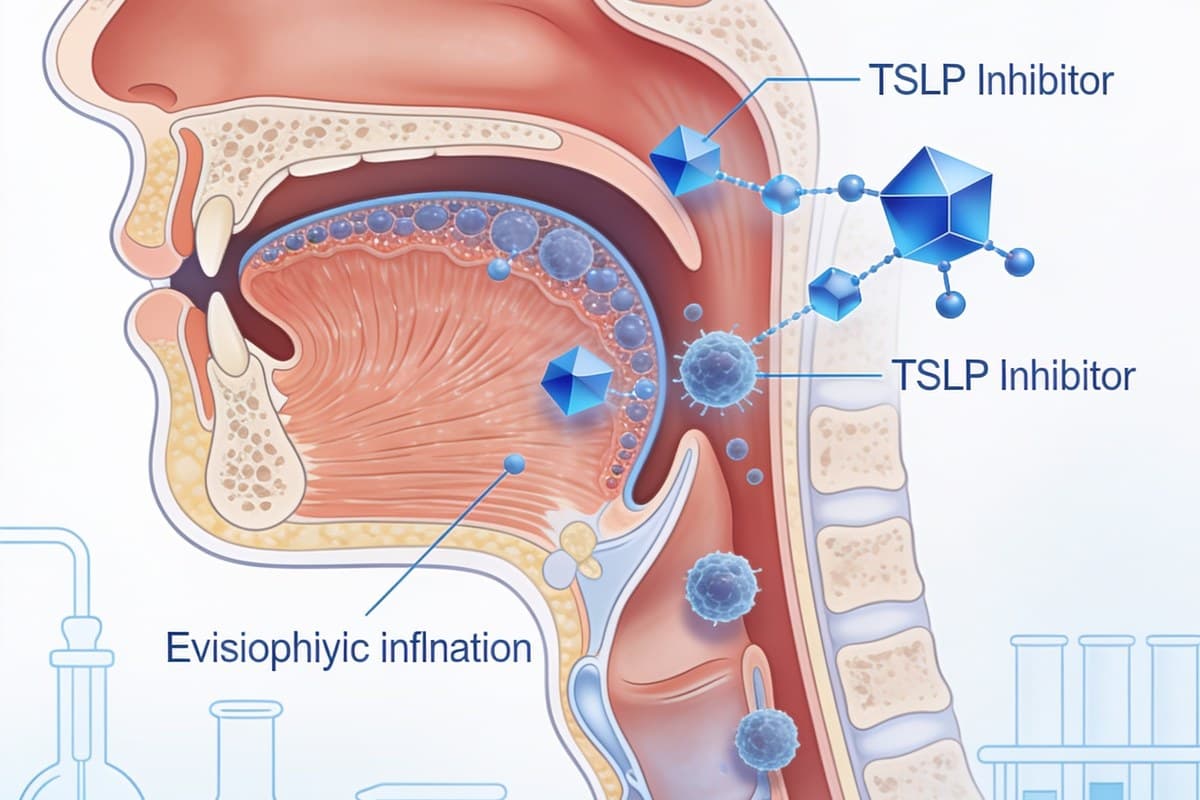
AstraZeneca and Amgen have reported positive late-stage results for Tezspire (tezepilumab) in eosinophilic esophagitis (EoE), a chronic inflammatory condition of the esophagus that affects an estimated 1 in 2,000 people in Western markets. The Phase III data showed that Tezspire met its primary endpoints of histological remission and symptom improvement, positioning the biologic as a potential blockbuster with a third approved indication alongside severe asthma and nasal polyps.
Eosinophilic esophagitis is characterized by the accumulation of eosinophils—a type of white blood cell—in the esophageal tissue, leading to difficulty swallowing, food impaction, and chronic inflammation. Current treatment options are limited, including proton pump inhibitors, topical corticosteroids, and dietary elimination therapies. The introduction of a targeted biologic like Tezspire could reshape the treatment landscape for a disease that has historically been managed rather than cured.
Tezspire works by blocking thymic stromal lymphopoietin (TSLP), an epithelial cytokine that sits at the top of the inflammatory cascade. Unlike biologics that target downstream mediators such as IL-5 or IL-13, Tezspire's mechanism of action addresses a broader range of inflammatory pathways by inhibiting TSLP, which activates multiple immune cell types including eosinophils, basophils, and mast cells. This upstream approach may explain why the drug has demonstrated efficacy across several type 2 inflammatory conditions.
For pharmaceutical suppliers and contract manufacturers, the expansion of Tezspire into EoE signals growing demand for biologic drug substance and drug product manufacturing capacity. Tezepilumab is a monoclonal antibody produced via mammalian cell culture, requiring specialized bioreactor capacity, downstream purification expertise, and cold-chain logistics. As the indication expands, AstraZeneca and Amgen will likely need to scale up API production and secure additional fill-finish capacity, creating opportunities for CDMOs with proven biologics manufacturing capabilities. The expansion of Tezspire into EoE also reinforces the growing commercial importance of type2 inflammatory disease drugs, a therapeutic area that has attracted billions of dollars in investment from major pharmaceutical companies seeking to address underserved patient populations across multiple organ systems.
The global eosinophilic esophagitis treatment market was valued at approximately $1.8 billion in 2025 and is projected to grow at a compound annual growth rate of over 12% through 2030. The approval of Dupixent (dupilumab) from Sanofi and Regeneron in 2022 validated the biologic approach to EoE, and Tezspire's entry would provide a mechanistically distinct alternative. Analysts estimate that Tezspire could capture $500 million to $1 billion in annual EoE sales, depending on pricing, payer coverage, and real-world efficacy data.
From a regulatory perspective, the EoE indication represents a strategic expansion for Tezspire, which was first approved in 2021 for severe asthma and subsequently gained approval for chronic rhinosinusitis with nasal polyps. The drug's safety profile across multiple indications has been consistent, with injection site reactions and pharyngitis being the most commonly reported adverse events. The EoE trial data reinforced this favorable safety profile, which will be important for securing regulatory approval in additional markets beyond the United States.
The competitive dynamics in the EoE space are intensifying. Beyond Dupixent, several companies are developing targeted therapies, including anti-IL-13 antibodies and Siglec-8 inhibitors. AstraZeneca and Amgen's head-to-head data against existing treatments will be closely watched by clinicians and payers alike. For API suppliers, this competitive landscape means sustained demand for multiple biologic drug substances rather than a winner-take-all scenario. This diversification of the supply base is particularly important given the global push to reduce dependence on single-source suppliers and build more resilient pharmaceutical supply chains in the post-pandemic era.
Supply chain considerations for biologics like Tezspire extend beyond the drug substance itself. The formulation requires specialized excipients, the device delivery system (autoinjector or prefilled syringe) needs precise manufacturing tolerances, and the cold-chain requirements add complexity to global distribution. As AstraZeneca and Amgen prepare for a potential EoE launch, their procurement teams will likely engage with existing suppliers while qualifying new sources to ensure supply resilience.
The Tezspire EoE results also highlight a broader trend in immunology drug development: the repurposing of successful biologics across related inflammatory conditions. This strategy reduces development risk, leverages existing manufacturing infrastructure, and maximizes the commercial return on R&D investment. For the pharmaceutical supply chain, multi-indication biologics translate to more predictable demand forecasting and longer product lifecycles, which benefits both innovators and their manufacturing partners. Contract manufacturers that have invested in flexible, multi-product biologics facilities will be best positioned to capture the incremental demand that each new Tezspire indication creates.
Looking ahead, AstraZeneca and Amgen are expected to submit regulatory filings for the EoE indication in the coming months, with potential approval and launch in 2027. The companies will also explore Tezspire's potential in additional inflammatory conditions, including atopic dermatitis and chronic obstructive pulmonary disease. Each new indication represents incremental demand for API, finished dosage form, and delivery device manufacturing—a trajectory that positions Tezspire as one of the most commercially significant biologics of the decade.
How can we help you?
Receive insights into the latest events and regulatory updates
Sent directly to your email
Get industry insights and Unibest news here
Contact Us →