

Industry News
Biogen's Tau-Targeting ASO BIIB080 Shows 26% Cognitive Decline Slowing in Alzheimer's Phase 2 Trial, Signaling ASO Manufacturing Demand
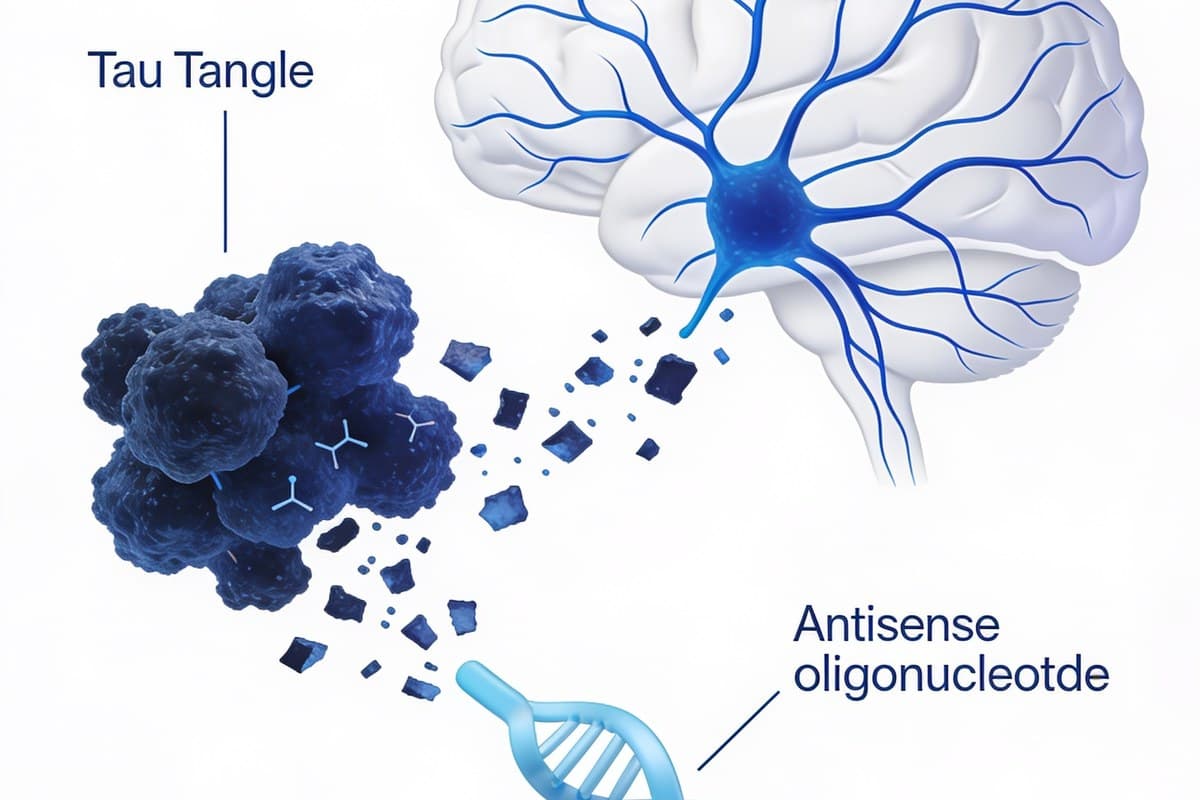
Biogen has presented detailed results from its Phase 2 "Celia" trial of BIIB080, a tau-targeting antisense oligonucleotide developed in partnership with Ionis Pharmaceuticals, providing the clearest evidence to date that reducing tau protein production can slow cognitive decline in early Alzheimer's disease. The findings, presented at a major scientific conference, showed that the lowest dose of BIIB080 achieved a 26% slowing of decline on the widely used CDR-SB scoring system — a level comparable to the 27% slowing demonstrated in the pivotal trial that led to Eisai and Biogen's approval of Leqembi.
Unlike approved Alzheimer's therapies such as Leqembi (lecanemab) and Eli Lilly's Kisunla (donanemab), which target amyloid protein plaques, BIIB080 works by gumming up the genetic instructions cells use to produce tau, another protein implicated in Alzheimer's progression. This novel mechanism represents a fundamentally different approach to treating the disease and could potentially complement amyloid-targeting therapies in combination regimens.
The Celia trial evaluated three different doses of BIIB080 administered over 18 months, with each dose showing superiority over placebo. However, the results presented an unexpected finding: the lowest dose arm demonstrated the strongest efficacy signal, outperforming the higher dose groups. This inverse dose-response relationship has raised questions among researchers about the optimal therapeutic window for tau reduction and may influence the design of future pivotal trials.
For API suppliers and oligonucleotide manufacturers, the BIIB080 results carry significant implications. Antisense oligonucleotides represent one of the fastest-growing drug modalities, with Ionis and its partners having brought multiple ASO therapies to market in recent years. The successful demonstration of tau reduction in Alzheimer's — a disease affecting an estimated 6.7 million Americans and over 55 million people globally — could dramatically expand demand for ASO manufacturing capacity if the program advances to Phase 3.
ASO manufacturing is a complex, multi-step chemical synthesis process that requires specialized equipment, highly purified nucleotide building blocks, and stringent quality control to ensure sequence fidelity and purity. The scale-up from clinical to commercial manufacturing for an Alzheimer's therapy would represent a step change in ASO production volumes, potentially requiring new manufacturing facilities and expanded supply chains for phosphoramidite reagents, solid supports, and purification resins.
The Celia results also validate Ionis's platform technology, which has faced scrutiny following recent clinical failures in other neurodegenerative indications. Roche recently terminated two Ionis-partnered programs for Huntington's disease after both tominersen and a second antisense oligonucleotide failed in clinical testing. The positive BIIB080 data suggest that while ASO therapeutics face inherent challenges in neurodegenerative diseases, the tau-targeting approach in Alzheimer's may represent a more tractable therapeutic strategy.
Biogen and Ionis's partnership on BIIB080 dates back several years, with Ionis responsible for the drug's discovery and early development while Biogen leads late-stage clinical development and commercialization. The strong Phase 2 results position the companies to advance discussions with regulatory agencies about a Phase 3 program, though the unusual dose-response findings may necessitate additional studies to optimize dosing before initiating a pivotal trial.
The Alzheimer's treatment landscape has evolved rapidly since the approval of Leqembi in 2023, with amyloid-targeting antibodies now established as the standard of care for early-stage disease. However, these therapies have significant limitations, including the need for intravenous infusion, risk of brain swelling (ARIA), and modest clinical benefits. A tau-targeting ASO that could be administered via intrathecal injection — as BIIB080 is designed — could offer a complementary or alternative treatment approach, particularly for patients who cannot tolerate amyloid-targeting therapies.
For CDMOs and specialized oligonucleotide manufacturers, the prospect of a large-scale Alzheimer's ASO program represents a transformative market opportunity. Current global ASO manufacturing capacity is limited, and a therapy targeting the massive Alzheimer's patient population would require significant expansion. Companies with expertise in large-scale oligonucleotide synthesis, aseptic fill-finish, and intrathecal drug product manufacturing would be well-positioned to capture this emerging demand.
The broader implications of the Celia results extend beyond Alzheimer's disease. If tau-targeting ASOs prove effective in slowing neurodegeneration, similar approaches could be explored for other tauopathies, including progressive supranuclear palsy, corticobasal degeneration, and chronic traumatic encephalopathy. Each of these indications would further expand the market for ASO therapeutics and the manufacturing infrastructure required to support them, reinforcing the growing importance of oligonucleotide production capabilities in the pharmaceutical supply chain.
How can we help you?
Receive insights into the latest events and regulatory updates
Sent directly to your email
Get industry insights and Unibest news here
Contact Us →