
Industry News
Bristol Myers Squibb Unveils $2.3B Houston Manufacturing Campus, Accelerating US Biologics Onshoring and Reshaping API Supply Chains
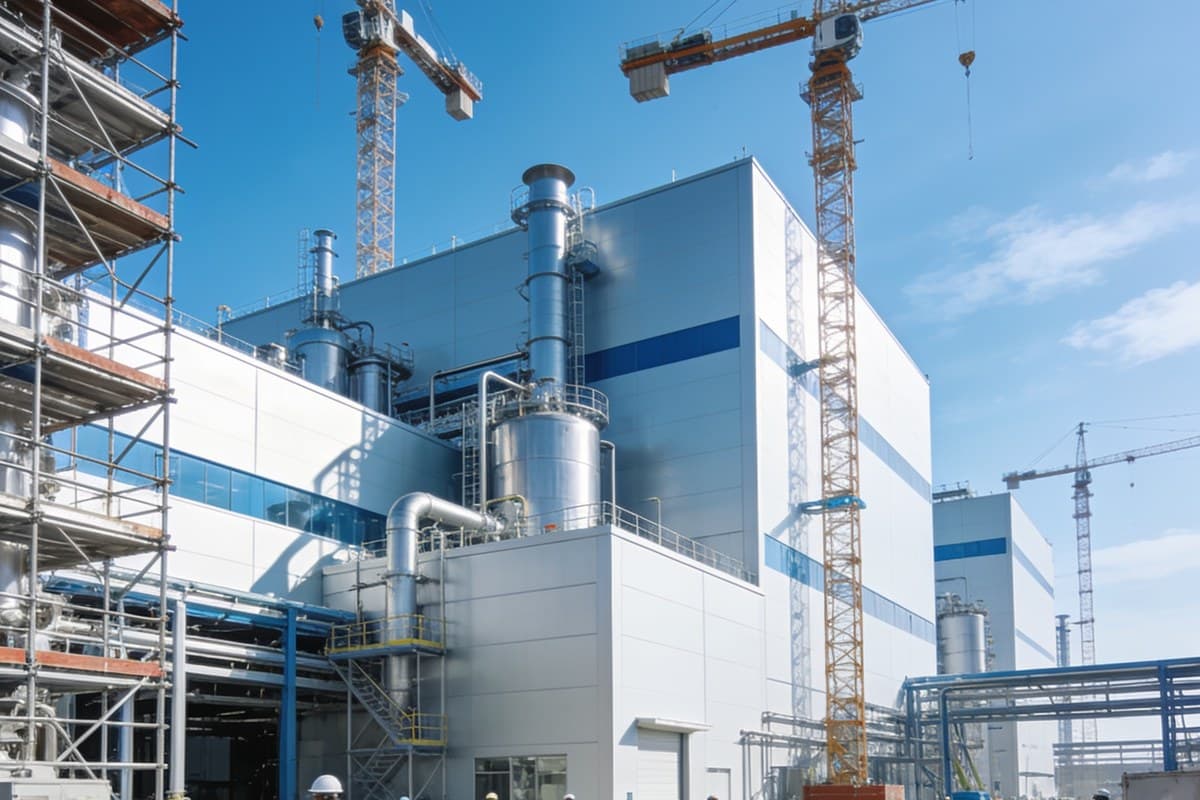
Bristol Myers Squibb has unveiled plans for a massive $2.3 billion, 600,000-square-foot manufacturing campus in Houston, Texas, marking one of the largest single-site pharmaceutical manufacturing investments announced in the United States this year. The project, which will be located in Generation Park in northeast Houston, represents a cornerstone of BMS's broader $40 billion US investment pledge and signals the company's aggressive pivot toward domestic production capacity for its growing biologics and oncology pipeline.
The Houston campus will focus on biologics manufacturing, including antibody-drug conjugates, monoclonal antibodies, and other complex biologic modalities that are central to BMS's late-stage pipeline. The facility is expected to create approximately 1,500 permanent jobs and thousands of construction positions during the multi-year build-out, with initial operations targeted for 2029. The investment comes as BMS faces mounting pressure to diversify its manufacturing footprint beyond its traditional New Jersey and Puerto Rico operations, particularly as the company's oncology portfolio expands into next-generation modalities.
For API suppliers and contract development and manufacturing organizations, the BMS Houston announcement carries significant implications. A facility of this scale will require substantial upstream supply chain support, including cell culture media, chromatography resins, single-use bioprocessing equipment, and raw materials for biologic drug substance production. CDMOs specializing in fill-finish operations, viral vector production, and ADC linker-payload chemistry may find new partnership opportunities as BMS ramps up capacity. The investment also signals BMS's long-term commitment to in-house manufacturing rather than outsourcing, a strategic choice that could influence how other large pharmaceutical companies approach capacity planning.
The scale of the BMS investment places it among the top pharmaceutical manufacturing commitments in recent US history, rivaling Moderna's mRNA production facilities and Eli Lilly's sprawling diabetes drug manufacturing network. Unlike those companies, however, BMS is building capacity for a broader range of modalities, including traditional monoclonal antibodies, next-generation bispecific constructs, and antibody-drug conjugates that require highly specialized linker-payload chemistry. This multi-modality approach positions the Houston campus as a flexible manufacturing hub capable of adapting to shifting pipeline priorities, a strategic advantage in an industry where clinical success rates are unpredictable and manufacturing demand can shift rapidly from one modality to another.
The Houston site selection reflects a broader industry trend toward US onshoring driven by both geopolitical risk mitigation and favorable policy incentives. The Trump administration's tariff threats on imported pharmaceuticals, combined with tax incentives embedded in recent legislation, have accelerated domestic manufacturing investment across the industry. BMS joins Eli Lilly, which recently committed $750 million to expand GLP-1 manufacturing with National Resilience, and Pfizer, which is restructuring $1.5 billion in manufacturing capacity, in a wave of US production expansion that is reshaping global API supply chains. The competitive dynamics of US pharmaceutical manufacturing are shifting as a result. Companies that invested early in domestic capacity, such as Regeneron with its Rensselaer, New York campus and Amgen with its Rhode Island facility, now hold strategic advantages in a policy environment that rewards onshoring. For API and intermediate suppliers, the wave of US manufacturing investment creates both opportunities and challenges: demand for raw materials and specialized inputs is rising, but suppliers must also navigate the complexity of serving clients who are simultaneously building in-house capacity and reducing reliance on third-party vendors.
Houston's appeal as a manufacturing hub extends beyond tax incentives. The city offers a deep pool of engineering and bioprocessing talent, proximity to major shipping ports for raw material import and finished product distribution, and a business-friendly regulatory environment. Generation Park, the specific development where the BMS campus will be built, has been positioned as a life sciences and advanced manufacturing corridor, with infrastructure investments designed to attract pharmaceutical and biotechnology companies.
The investment also has implications for the competitive dynamics of the oncology manufacturing landscape. BMS's ADC pipeline, which includes several candidates in late-stage development, requires highly specialized manufacturing capabilities that few facilities worldwide currently possess. By building dedicated ADC capacity, BMS reduces its dependence on external CDMOs and positions itself to control production timelines and quality standards for what many analysts predict will be a dominant treatment modality in oncology over the next decade. The move may prompt competitors with similar ADC pipeline ambitions to accelerate their own capacity investments.
From a supply chain risk management perspective, the Houston campus represents BMS's response to vulnerabilities exposed during the COVID-19 pandemic and ongoing geopolitical tensions. Concentrating manufacturing in a single region or country has proven risky, and the addition of a major Texas facility alongside existing operations in the US Northeast and Puerto Rico provides geographic diversification within the domestic market. For API and intermediate suppliers, this geographic spread may create opportunities to establish regional supply relationships, reducing lead times and transportation costs. The Houston announcement also underscores the growing importance of Texas as a pharmaceutical manufacturing hub. The state's combination of low energy costs, favorable tax policies, and a large educated workforce has attracted multiple life sciences investments in recent years. For pharmaceutical supply chain professionals, the concentration of manufacturing capacity in Texas creates opportunities for regional supplier clusters, where raw material providers, equipment manufacturers, and logistics companies can establish proximity to major production sites, reducing lead times and transportation costs while improving supply chain resilience.
Industry analysts note that the $2.3 billion figure, while substantial, likely represents only the initial phase of development. BMS has historically expanded manufacturing sites incrementally, and the 600,000-square-foot campus could grow significantly as the company's pipeline matures and approved products reach commercial scale. For pharmaceutical suppliers and CDMOs positioning themselves for long-term partnerships, the BMS Houston investment signals a multi-decade commitment to domestic biologics manufacturing that will generate sustained demand for raw materials, equipment, and specialized services across the pharmaceutical supply chain.
How can we help you?
Receive insights into the latest events and regulatory updates
Sent directly to your email
Get industry insights and Unibest news here
Contact Us →