

Industry News
Capricor Duchenne Fda Adcom Cell Therapy 2026
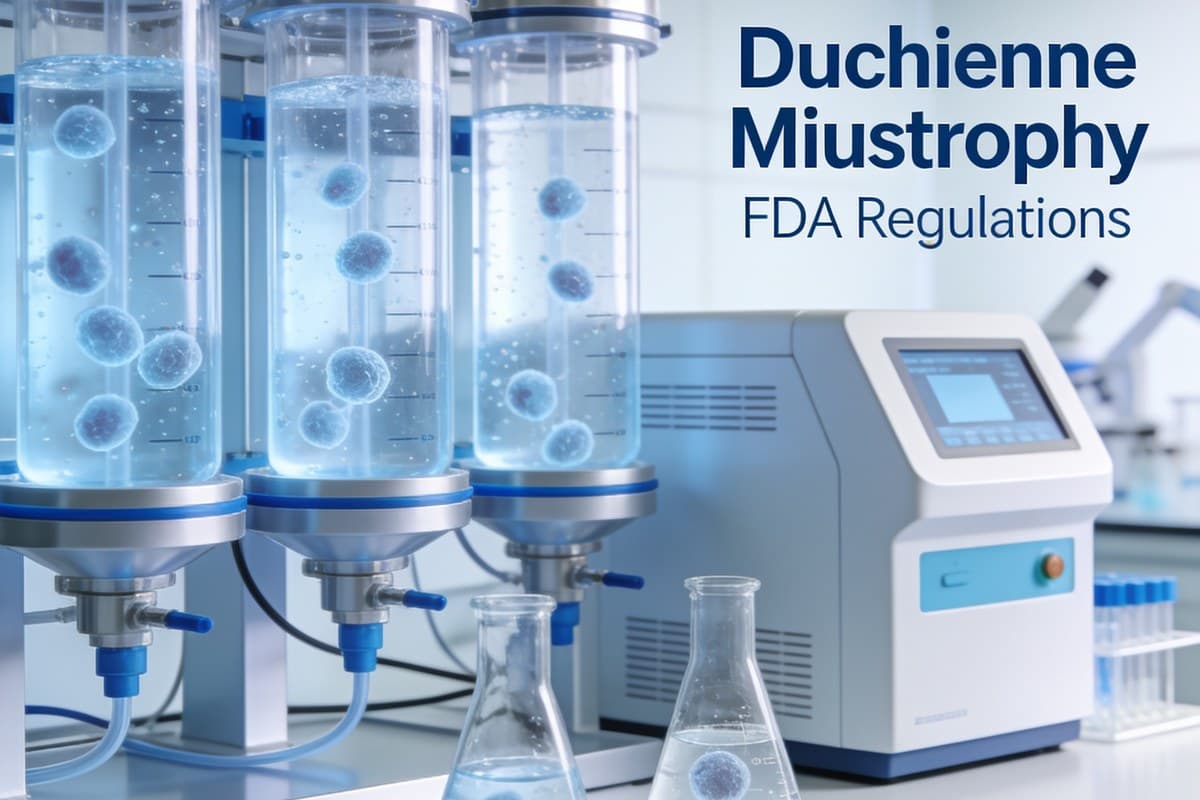
Capricor Therapeutics faces a pivotal regulatory moment as FDA scientists have raised significant questions about the clinical evidence supporting its allogeneic cell therapy deramiocel for Duchenne muscular dystrophy, just days ahead of a scheduled advisory committee meeting on July 29. The FDA's detailed review documents, released ahead of the advisory committee vote, question whether the efficacy data from Capricor's HOPE-2 trial are robust enough to support accelerated approval, sending Capricor shares sharply lower and raising fundamental uncertainty about the regulatory path forward for this innovative cell therapy platform. For pharmaceutical manufacturers and cell therapy CDMOs, the outcome of this regulatory milestone carries significant implications for the commercial viability and manufacturing trajectory of next-generation allogeneic cell-based treatments.
Deramiocel, also known as CAP-1002, is an allogeneic cardiosphere-derived cell therapy that Capricor has been developing for the treatment of Duchenne muscular dystrophy-associated cardiomyopathy, which remains a leading cause of death in patients with this devastating genetic disorder. The therapy works through paracrine signaling mechanisms, releasing anti-inflammatory and regenerative factors that are intended to preserve cardiac and skeletal muscle function in patients whose muscles are progressively deteriorating. In the HOPE-2 clinical trial, deramiocel demonstrated statistically significant improvements in certain cardiac and upper limb function endpoints compared to placebo, but the FDA's comprehensive review has raised questions about the clinical meaningfulness of these observed benefits and the adequacy of the trial's design and statistical methodology.
For cell therapy manufacturers, the FDA's scrutiny of deramiocel underscores the significant regulatory complexity facing allogeneic cell therapies, which must demonstrate not only safety and efficacy but also highly consistent manufacturing quality across production batches. Unlike autologous CAR-T therapies that are manufactured from a patient's own cells, allogeneic products like deramiocel are produced from donor-derived cells and must meet stringent lot-to-lot consistency requirements to ensure predictable biological activity. This fundamental difference places enormous demands on cell sourcing and qualification, expansion processes, cryopreservation methods, and comprehensive quality control testing throughout the manufacturing workflow, all of which contribute to the overall cost structure and supply chain complexity of allogeneic cell therapy production.
The advisory committee meeting outcome will have far-reaching implications for the broader cell therapy manufacturing ecosystem and supply chain. A favorable vote could validate the allogeneic cell therapy approach for non-oncology rare disease indications, potentially opening entirely new manufacturing markets for CDMOs specializing in cell-based therapeutic production and driving demand for specialized cell culture reagents, growth factors, and analytical testing services. Conversely, an unfavorable recommendation could significantly dampen investor and industry investment in allogeneic cell therapy platforms for rare diseases, redirecting manufacturing capacity and capital toward more commercially proven indications such as CAR-T therapies for hematological malignancies where the regulatory pathway is better established.
Capricor has built manufacturing partnerships to support the potential commercialization of deramiocel, including relationships with contract manufacturers capable of handling the highly specialized requirements of allogeneic cell-based therapies. The company has previously stated that its proprietary manufacturing process can produce hundreds of therapeutic doses from a single donor tissue sample, offering potential scalability and cost advantages over autologous cell therapy approaches that require individual manufacturing runs for each patient. However, the FDA's detailed questions about clinical evidence highlight the fundamental challenge facing all cell therapy manufacturers: demonstrating convincingly that the product's measurable biological activity in vitro and in clinical endpoints translates into clinically meaningful and durable patient outcomes that justify the manufacturing complexity and cost.
The regulatory uncertainty surrounding deramiocel arrives at a time when the broader cell and gene therapy manufacturing sector is experiencing both rapid growth and increasing regulatory scrutiny across the industry. Multiple companies developing cell and gene therapies have faced FDA questions about the consistency and durability of therapeutic effects, and manufacturing deviations have led to clinical holds and warning letters at several manufacturing sites. For API suppliers and cell therapy raw material providers, these evolving regulatory headwinds create both significant risk and strategic opportunity, as sponsor companies invest heavily in improved manufacturing processes, enhanced quality systems, and more sophisticated analytical methods to meet the increasingly stringent regulatory expectations for cell-based therapies.
For pharmaceutical suppliers serving the cell therapy sector, the Capricor regulatory situation illustrates the critical importance of FDA outcomes in driving commercial manufacturing demand. A positive advisory committee recommendation followed by FDA approval would create substantial commercial-scale demand for cell culture media components, recombinant growth factors, cryopreservation solutions, and comprehensive quality control testing services required for large-scale allogeneic cell therapy production. The manufacturing infrastructure required for these therapies differs significantly from traditional biologics manufacturing, requiring specialized closed-system processing equipment, aseptic handling capabilities, and cold chain logistics expertise that are still being scaled and standardized across the industry.
Regardless of the advisory committee's ultimate recommendation, the FDA's detailed and publicly available review of deramiocel provides invaluable signals about the evolving regulatory expectations for allogeneic cell therapies in rare disease indications. Manufacturers and suppliers who closely monitor and analyze these regulatory developments can better anticipate the requirements for cell therapy production, positioning themselves to serve a market segment that, while still maturing and facing near-term uncertainty, represents one of the most dynamic and rapidly evolving areas of the pharmaceutical industry. The July 29 advisory committee vote will be closely watched not only by Capricor and its investors but by the entire cell therapy manufacturing supply chain as a bellwether for the regulatory future of allogeneic cell-based medicines.
How can we help you?
Receive insights into the latest events and regulatory updates
Sent directly to your email
Get industry insights and Unibest news here
Contact Us →