
Industry News
Novartis Enters ADC Race with $1.5B Myricx Acquisition, Bringing Novel NMTi Payload Platform
Novartis has made its long-anticipated entry into the antibody-drug conjugate (ADC) arena with the acquisition of privately held U.K. biotech Myricx Bio for up to $1.5 billion. The Swiss pharmaceutical giant will pay $1.1 billion upfront, with an additional $400 million in milestone payments, in a deal expected to close before year-end. The transaction hands Novartis two differentiated ADC candidates targeting HER2-positive and B7-H3-positive tumors, along with a novel enzyme-inhibitor payload platform that could set its conjugates apart in an increasingly crowded market.
The ADC field has experienced explosive growth over the past several years, driven by clinical successes from AstraZeneca and Daiichi Sankyo's Enhertu, which has become a multi-billion-dollar seller. AbbVie, Eli Lilly, Merck & Co., and Pfizer have all made significant bets on next-generation ADCs through multi-billion-dollar acquisitions and licensing agreements. Novartis, notably, had been absent from the ADC gold rush — until now. The Myricx deal signals a strategic pivot for the company, which has traditionally focused on radioligand therapies such as Lutathera and Pluvicto for oncology.
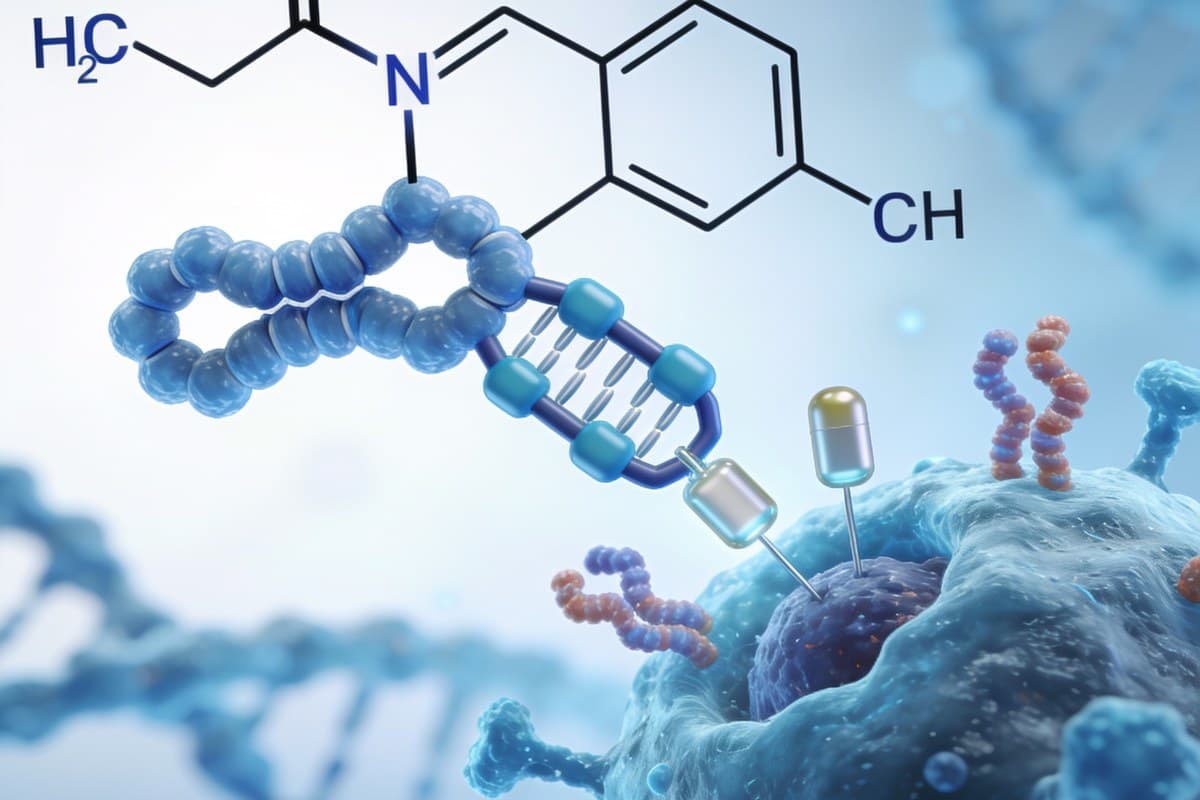
At the core of Myricx's platform is a next-generation inhibitor of the enzyme N-myristoyltransferase, or NMTi. This mechanism of action is fundamentally different from the topoisomerase I inhibitor payloads used in most current ADCs, including Enhertu. NMT plays a critical role in cancer cell growth and survival, and disrupting its activity can overcome the drug resistance mechanisms that have increasingly challenged existing ADC therapies. By delivering NMTi payloads directly to tumor cells via antibody targeting, Myricx's approach aims to improve efficacy while reducing the systemic toxicity associated with conventional chemotherapy.
Myricx's two lead ADC candidates target HER2 and B7-H3, two proteins commonly overexpressed in breast and lung cancers, respectively. The HER2-targeting program will compete in a space already occupied by Enhertu and Roche's Kadcyla, but the differentiated payload could offer advantages in patients who have developed resistance to existing therapies. The B7-H3 program targets an immune checkpoint ligand that is highly expressed across multiple solid tumor types, representing a broader oncology opportunity.
The biotech was spun out of Imperial College London and the Francis Crick Institute with support from Cancer Research UK. Myricx received seed investment from Brandon Capital and Sofinnova Partners in 2019, later attracting funding from Eli Lilly and Novo Holdings. The company's scientific pedigree and backing from major pharmaceutical investors underscore the clinical potential of the NMTi platform.
For pharmaceutical suppliers and API manufacturers, Novartis's entry into the ADC space carries significant supply chain implications. ADC manufacturing is among the most complex in biologics, requiring specialized capabilities in antibody production, linker chemistry, and cytotoxic payload synthesis. The growing number of ADC programs across the industry — now bolstered by Novartis — is driving sustained demand for high-potency API (HPAPI) manufacturing, bioconjugation services, and specialized analytical testing.
The deal also highlights a broader trend of big pharma companies using acquisitions to quickly build ADC capabilities rather than developing them organically. AbbVie's $10.1 billion purchase of ImmunoGen, Lilly's acquisition of MorphoSys, and Pfizer's $43 billion takeover of Seagen all followed the same playbook. Novartis's approach of acquiring a platform company — rather than a single asset — suggests the company views ADCs as a long-term strategic modality, not just a one-off pipeline addition.
As the ADC market matures, differentiation will increasingly depend on novel payloads, optimized linker technology, and biomarker-driven patient selection. Myricx's NMTi platform addresses all three of these dimensions, positioning Novartis to compete effectively in a field that analysts project could exceed $30 billion in global sales by 2030. For B2B pharmaceutical suppliers, the continued expansion of ADC pipelines across major pharma companies signals sustained and growing demand for specialized manufacturing services and high-quality APIs.
How can we help you?
Receive insights into the latest events and regulatory updates
Sent directly to your email
Get industry insights and Unibest news here
Contact Us →