

Industry News
Antheia Lands $80M DOD Loan to Onshore Generic API Manufacturing, Reinforcing US Biomanufacturing Push
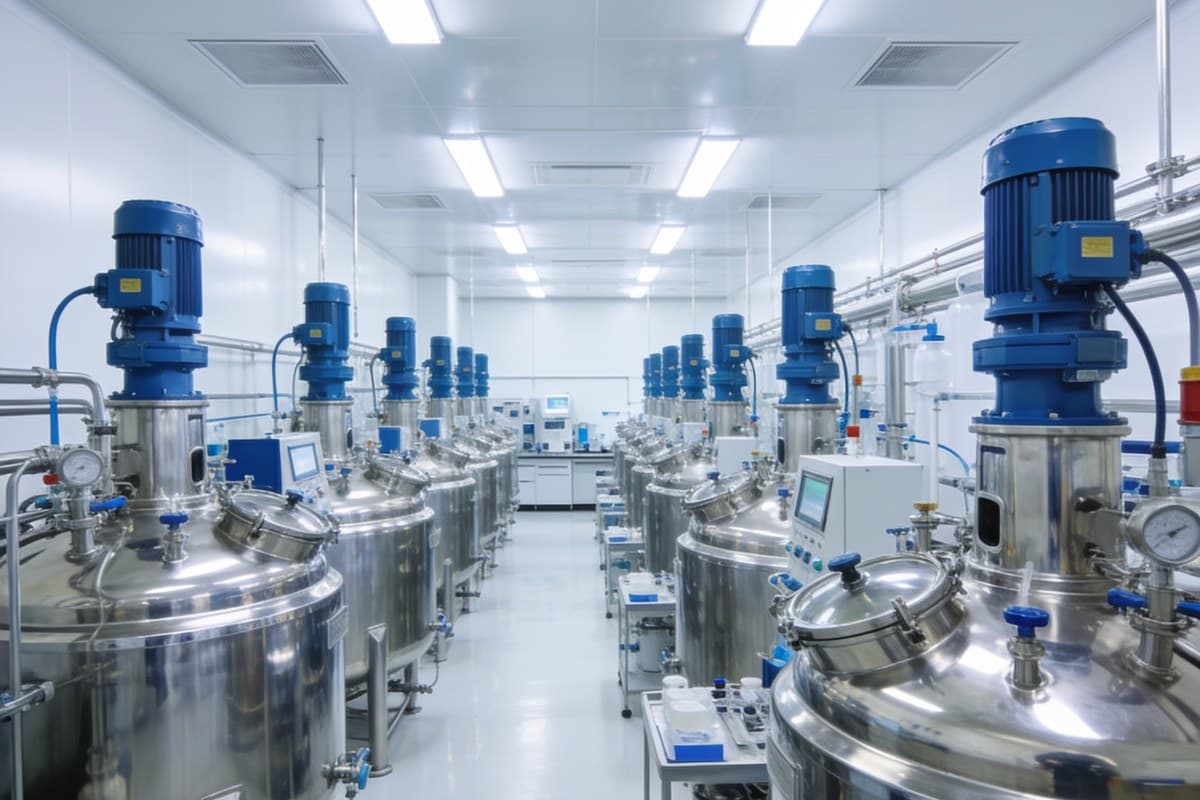
Antheia, a California-based synthetic biology company, has secured a conditional $80 million loan from the Department of Defense's Office of Strategic Capital to build generic drug manufacturing capacity in the United States. The financing marks one of the largest federal commitments to domestic pharmaceutical production this year and directly targets the country's dependence on imported active pharmaceutical ingredients. For suppliers of APIs, intermediates, and finished formulations, the announcement is a concrete signal that reshoring capital is now flowing into commercial-scale capacity, not just feasibility studies and policy papers.
Antheia's core technology replaces traditional crop-based supply chains with engineered yeast fermentation. Rather than extracting medicines from plants such as the opium poppy, the company programs microbes to produce the same complex alkaloids in steel tanks. Its flagship work centers on thebaine, the precursor for naloxone and other essential opioid-modulating medicines. This biosynthetic route promises consistent yields, shorter lead times, and freedom from agricultural variability, weather risk, and geopolitical concentration in the handful of countries that currently dominate global botanical API production.
The involvement of the Department of Defense is notable. The Office of Strategic Capital was created to channel financing into technologies deemed critical to national security, and essential medicines have increasingly fallen under that umbrella. Naloxone and related compounds sit on federal stockpile and readiness lists, and military and civilian health systems share the same fragile supply base. A domestic thebaine and naloxone supply chain reduces exposure to export restrictions, shipping disruptions, and quality-control failures that have periodically rippled through hospital and emergency medicine procurement.
The loan arrives in the middle of a tariff and trade-policy environment that is actively penalizing imported drug inputs. US duties on Chinese and Indian pharmaceutical goods have raised landed costs for many generic APIs and intermediates, compressing margins for formulators already operating in a low-price generic market. For procurement teams, the arithmetic of sourcing is shifting: an onshore supplier that once looked expensive on a per-kilogram basis can now win on total cost of ownership once tariffs, freight, safety stock, and shortage risk are added to the equation.
For buyers of plant-derived APIs, the strategic case is straightforward. Alkaloid supply chains have historically concentrated in a few producing regions, leaving downstream manufacturers exposed when quotas, harvests, or regulatory inspections shift. Biosynthetic capacity adds a genuinely independent second source. Suppliers evaluating new qualification programs should expect more interest in dual-sourcing frameworks where a fermentation-derived material sits alongside a traditional extraction-based material, backed by full drug master file documentation and comparability data.
The announcement also carries implications for the CDMO and technology-transfer sector. Building domestic capacity is not only about molecules; it is about the physical infrastructure of fermentation suites, downstream purification trains, and analytical laboratories that can operate under current Good Manufacturing Practice. Projects of this type typically generate demand for process development, scale-up engineering, method validation, and regulatory filing support. CDMOs with mammalian or microbial fermentation experience and strong quality systems are well positioned to participate as partners rather than competitors.
Generic manufacturers should watch how quickly biosynthetic capacity can reach commercial cost targets. Fermentation-based production excels on consistency and security of supply, but matching the unit economics of established overseas extraction and synthesis routes requires scale, process intensification, and reliable titers. The conditional structure of the loan suggests milestone-based disbursement tied to construction and qualification progress, which will make the company's execution timeline publicly visible as facilities come online over the coming quarters.
The broader reshoring wave extends well beyond a single company. Federal agencies have been expanding loans, grants, and advance-purchase commitments aimed at domestic production of essential medicines, and several states have added their own incentives for pharmaceutical plant construction. Each new facility, whether producing finished dosage forms or upstream inputs, tightens the feedback loop between policy intent and industrial reality. Suppliers with US-based assets should factor these incentives into their capital planning, while import-dependent competitors should stress-test their exposure to trade measures.
Challenges remain. Overseas API producers benefit from decades of scale, integrated clusters, and cost structures that new entrants cannot replicate overnight. Regulatory validation of a novel biosynthetic route demands rigorous demonstration of impurity profiles, equivalence, and process robustness, and customers will rightly demand extensive comparability packages before switching qualified sources. Nevertheless, the direction of travel is clear: buyers and sellers alike are repricing supply-chain risk, and domestic production is moving from a talking point to a funded industrial strategy.
For B2B suppliers across the pharmaceutical value chain, the practical takeaway is to prepare for a procurement environment that values resilience alongside price. That means investing in transparent capacity data, dual-source qualification packages, and documentation that helps customers pass audits and filings without friction. Companies that can offer verifiable domestic or allied-nation production, backed by strong CMC dossiers and dependable delivery performance, will find a receptive audience among formulators re-engineering their supply chains in response to tariffs, shortages, and national-security scrutiny.
How can we help you?
Receive insights into the latest events and regulatory updates
Sent directly to your email
Get industry insights and Unibest news here
Contact Us →