
Industry News
Roche Inks $15B ADC Pact with Hansoh Pharma, Reshaping Global CDMO Supply Chain
Roche has entered into a landmark agreement with China's Hansoh Pharma that could reshape the antibody-drug conjugate (ADC) manufacturing landscape. Under the terms of the deal, Roche will pay Hansoh $400 million upfront for rights to multiple ADC programs, with the total value of the partnership reaching approximately $15 billion when milestones and royalties are included. The agreement signals a significant acceleration in the global race to develop next-generation ADCs and underscores the growing strategic importance of Chinese biopharma companies in the global oncology supply chain.
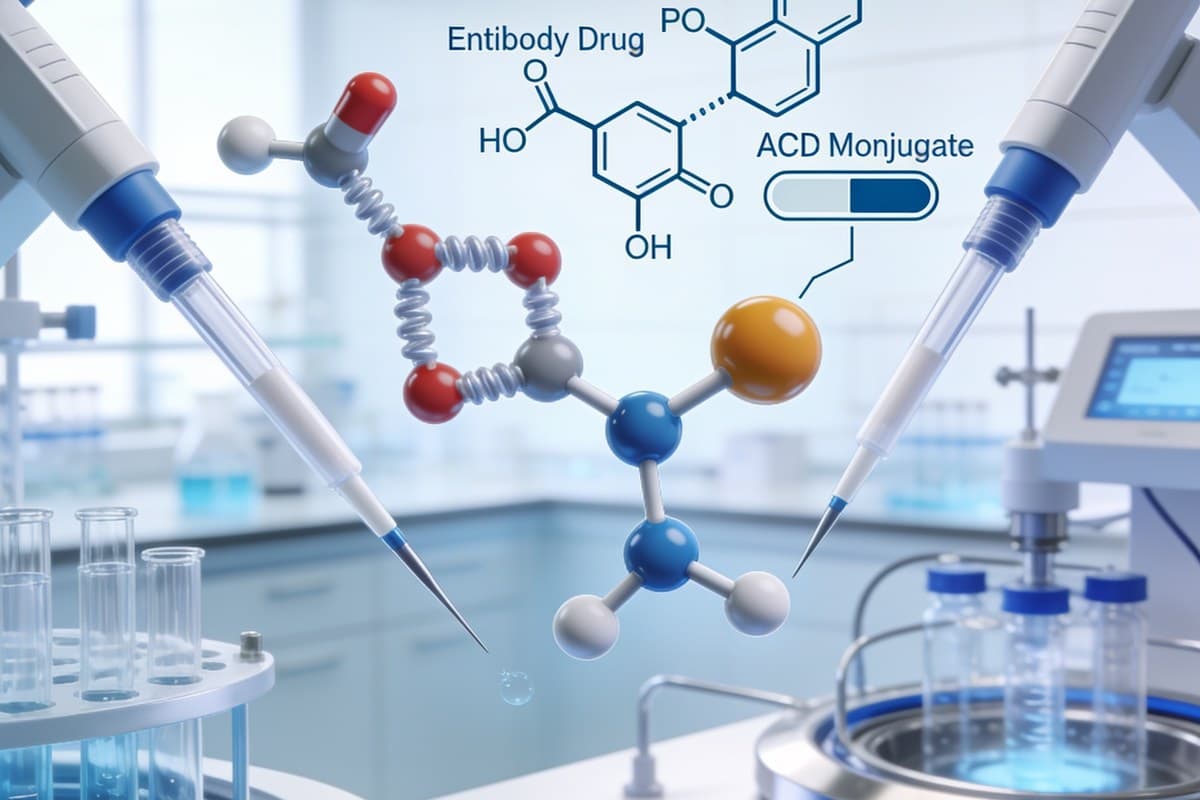
The deal centers on several ADC candidates from Hansoh's pipeline, which has been quietly building one of the most robust ADC portfolios in Asia. ADCs are complex biologic drugs that combine a monoclonal antibody with a cytotoxic payload via a chemical linker, requiring highly specialized manufacturing capabilities across multiple production steps. For contract development and manufacturing organizations (CDMOs) and API suppliers, the implications of a deal of this magnitude are substantial, as it signals sustained and growing demand for ADC-specific manufacturing services and raw materials.
ADC manufacturing is among the most technically demanding processes in biopharma. Each ADC requires the production of a monoclonal antibody, a potent cytotoxic payload (often a highly potent API or HPAPI), and a specialized linker chemistry. These three components must be conjugated under tightly controlled conditions, and the final product must meet stringent purity and potency specifications. The complexity of this process means that ADC programs typically rely on a network of specialized suppliers, from HPAPI manufacturers to bioconjugation CDMOs, creating significant opportunities across the supply chain.
For CDMO operators, the Roche-Hansoh deal reinforces the trend of large pharmaceutical companies outsourcing ADC manufacturing rather than building in-house capacity. ADC production requires specialized containment facilities for handling highly potent compounds, dedicated bioconjugation suites, and analytical capabilities tailored to the unique quality attributes of these molecules. Many pharma companies, even those as large as Roche, prefer to partner with CDMOs that have already invested in the necessary infrastructure and expertise rather than making the capital-intensive commitment to build their own ADC manufacturing plants.
The Hansoh partnership also highlights the increasing role of Chinese pharmaceutical companies as licensors and partners in global drug development. Hansoh, one of China's largest pharmaceutical companies, has invested heavily in ADC research and development over the past several years. By partnering with Roche, Hansoh gains access to Roche's global commercial reach and regulatory expertise, while Roche obtains a pipeline of ADC candidates at a stage where significant clinical development work has already been completed. This model of Chinese innovation partnering with Western commercialization capability is becoming increasingly common and has direct implications for the global API and intermediates supply chain.
From an API supply chain perspective, the growing number of ADC programs in clinical development is creating a surge in demand for HPAPIs and specialized linker-payload intermediates. These are among the most challenging APIs to manufacture, requiring specialized containment equipment, rigorous safety protocols, and highly skilled technical personnel. The Roche-Hansoh deal adds multiple new programs to an already crowded ADC development pipeline, further tightening supply in what is already a capacity-constrained segment of the pharmaceutical manufacturing industry.
The deal also comes at a time when the global ADC market is experiencing unprecedented growth. Multiple ADC approvals in recent years, including treatments for breast cancer, bladder cancer, and lymphoma, have demonstrated the therapeutic potential of this drug class. Industry analysts project the global ADC market could exceed $30 billion by 2030, driven by both new approvals and expanded indications for existing products. This growth trajectory is attracting significant investment in ADC manufacturing capacity, with several major CDMO operators announcing expansions of their ADC-specific facilities.
For pharmaceutical ingredient suppliers and intermediates manufacturers, the implications of this deal extend beyond the immediate ADC pipeline. The growing complexity of ADC linker chemistry is driving demand for novel chemical intermediates and specialized reagents that were previously produced in relatively small quantities. As ADC programs advance through clinical development and move toward commercialization, the volumes of these materials needed will increase substantially, creating new business opportunities for suppliers with the technical capabilities to produce them at scale.
The Roche-Hansoh partnership is also notable for its timing in the broader context of geopolitical tensions affecting the pharmaceutical supply chain. While some Western pharma companies have been cautious about deepening ties with Chinese partners amid concerns about supply chain security and intellectual property protection, this deal demonstrates that the value proposition of Chinese biopharma innovation remains compelling. For companies in the pharmaceutical supply chain, navigating this complex geopolitical landscape while maintaining access to the best available science and manufacturing capabilities will be a defining challenge in the years ahead.
In summary, the Roche-Hansoh ADC deal represents a watershed moment for the ADC manufacturing ecosystem. With $15 billion in potential value at stake, the partnership will generate sustained demand for ADC-specific manufacturing services, HPAPIs, linker intermediates, and specialized analytical capabilities. For CDMOs, API suppliers, and intermediates manufacturers positioned in the ADC supply chain, the deal confirms that the current wave of ADC investment is not a passing trend but a fundamental shift in how complex oncology drugs are developed and manufactured.
How can we help you?
Receive insights into the latest events and regulatory updates
Sent directly to your email
Get industry insights and Unibest news here
Contact Us →