

Company News
Aspen Neuroscience Files for Nasdaq IPO to Advance Autologous Cell Therapy for Parkinson's Disease
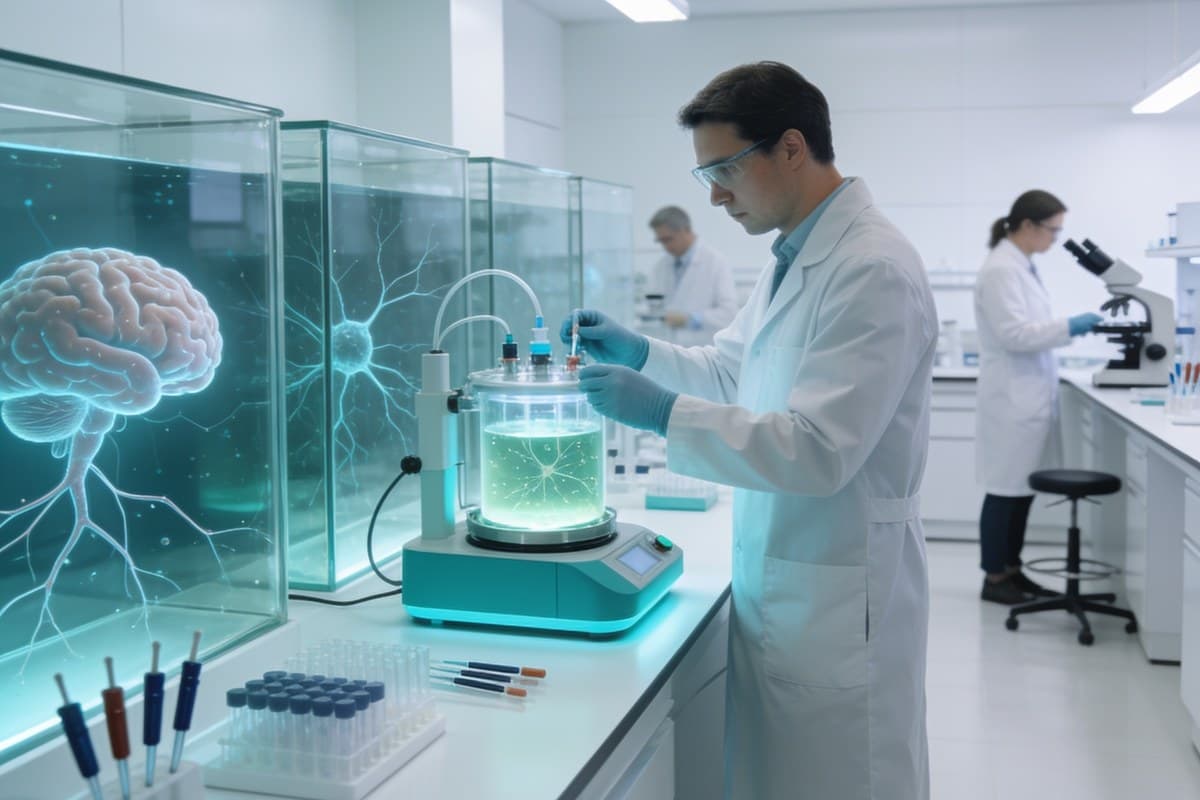
Aspen Neuroscience has filed for an initial public offering on the Nasdaq, seeking to raise capital to advance its pioneering autologous cell therapy for Parkinson's disease. The San Diego-based biotech company is developing ANPD001, a treatment that converts a patient's own skin cells into dopamine-producing neurons for transplantation back into the brain. This personalized approach to regenerative medicine represents a significant departure from conventional drug development, and its manufacturing requirements are reshaping expectations for cell therapy production at scale.
The science behind ANPD001 begins with induced pluripotent stem cell (iPSC) technology. Researchers take a small sample of the patient's skin cells and reprogram them into iPSCs, which are then differentiated into dopaminergic neuron precursors. These cells are quality-tested, cryopreserved, and ultimately surgically implanted into the patient's brain where they are expected to restore dopamine production lost to Parkinson's neurodegeneration. The entire process from biopsy to treatment spans several months, requiring tightly controlled manufacturing environments and extensive quality release testing at each stage.
For the pharmaceutical supply chain, Aspen's approach highlights the growing importance of autologous cell therapy manufacturing infrastructure. Unlike traditional biologics, which are produced in large-scale bioreactors and distributed broadly, autologous therapies are manufactured individually for each patient. This one-patient-one-batch model demands fundamentally different operational capabilities: dedicated cleanroom suites, individualized production workflows, chain-of-identity documentation, and just-in-time logistics that can deliver viable cells to clinical sites within narrow time windows.
The IPO filing comes at a moment of renewed investor interest in cell and gene therapy after a challenging period marked by manufacturing setbacks and commercial disappointments across the sector. Several high-profile cell therapy companies have struggled with scale-up challenges, quality consistency, and the economics of personalized medicine. Aspen's decision to pursue a public listing suggests confidence that its manufacturing platform has addressed many of these historical pain points, though the company will face intense scrutiny from investors who have been burned by previous cell therapy promises.
Manufacturing autologous cell therapies at commercial scale remains one of the most complex undertakings in modern pharmaceutical production. Each patient's cells must be processed through dozens of discrete steps including reprogramming, expansion, differentiation, purification, formulation, and cryopreservation. Every step requires specialized reagents, growth factors, culture media, and substrates that must be sourced, qualified, and supplied under current Good Manufacturing Practice (cGMP) conditions. The supplier ecosystem supporting these workflows is still maturing, creating opportunities for companies that can provide GMP-grade raw materials with consistent lot-to-lot quality.
Quality control presents another formidable challenge. For autologous therapies, the starting material varies with each patient, introducing biological variability that does not exist in conventional biomanufacturing. Aspen must demonstrate that its differentiation protocols reliably produce neurons with the correct phenotype, potency, and purity regardless of the donor's age, disease stage, or genetic background. This requires robust analytical methods including flow cytometry, gene expression profiling, and functional assays that can characterize cell identity and viability with precision.
The Parkinson's disease market represents a compelling commercial opportunity if ANPD001 succeeds in clinical development. Current treatments for Parkinson's, including levodopa and dopamine agonists, manage symptoms but do not slow or reverse the underlying neurodegeneration. A cell therapy that restores dopaminergic function could address a significant unmet medical need affecting more than 10 million people worldwide. The global Parkinson's therapeutics market is projected to exceed $8 billion by 2030, and a curative cell therapy could command premium pricing similar to other advanced therapy medicinal products (ATMPs).
For contract development and manufacturing organizations (CDMOs) specializing in cell therapy, Aspen's progress validates the long-term market opportunity in personalized regenerative medicine. While the autologous model inherently limits the per-product manufacturing volumes compared to traditional biologics, the complexity and value of each patient batch creates demand for high-margin specialized services. CDMOs with established track records in iPSC processing, viral vector production, and cell therapy logistics are positioned to capture growing demand as more autologous programs advance through clinical development toward commercialization.
The regulatory pathway for autologous cell therapies continues to evolve as agencies gain experience with these novel products. The FDA has established the Office of Tissues and Advanced Therapies specifically to handle the unique review challenges posed by cell and gene therapies. Manufacturing changes that would be routine for conventional drugs, such as facility modifications or reagent supplier changes, require extensive comparability studies for cell therapies. This regulatory rigor, while necessary to ensure patient safety, reinforces the importance of establishing robust manufacturing processes early in clinical development to avoid costly changes later.
Aspen Neuroscience's IPO represents a milestone not only for the company but for the broader autologous cell therapy field. Success in the public markets would signal investor confidence in personalized manufacturing platforms and could catalyze additional investment across the cell therapy supply chain. For API suppliers, reagent manufacturers, and CDMOs serving the regenerative medicine sector, Aspen's trajectory offers a window into the future of pharmaceutical manufacturing: smaller batches, higher complexity, tighter timelines, and an unwavering focus on individual patient outcomes.
How can we help you?
Receive insights into the latest events and regulatory updates
Sent directly to your email
Get industry insights and Unibest news here
Contact Us →