

Industry News
Genentech Commits $750M to New Oregon Manufacturing Facility, Signaling Roche's Continued US Biologics Capacity Expansion
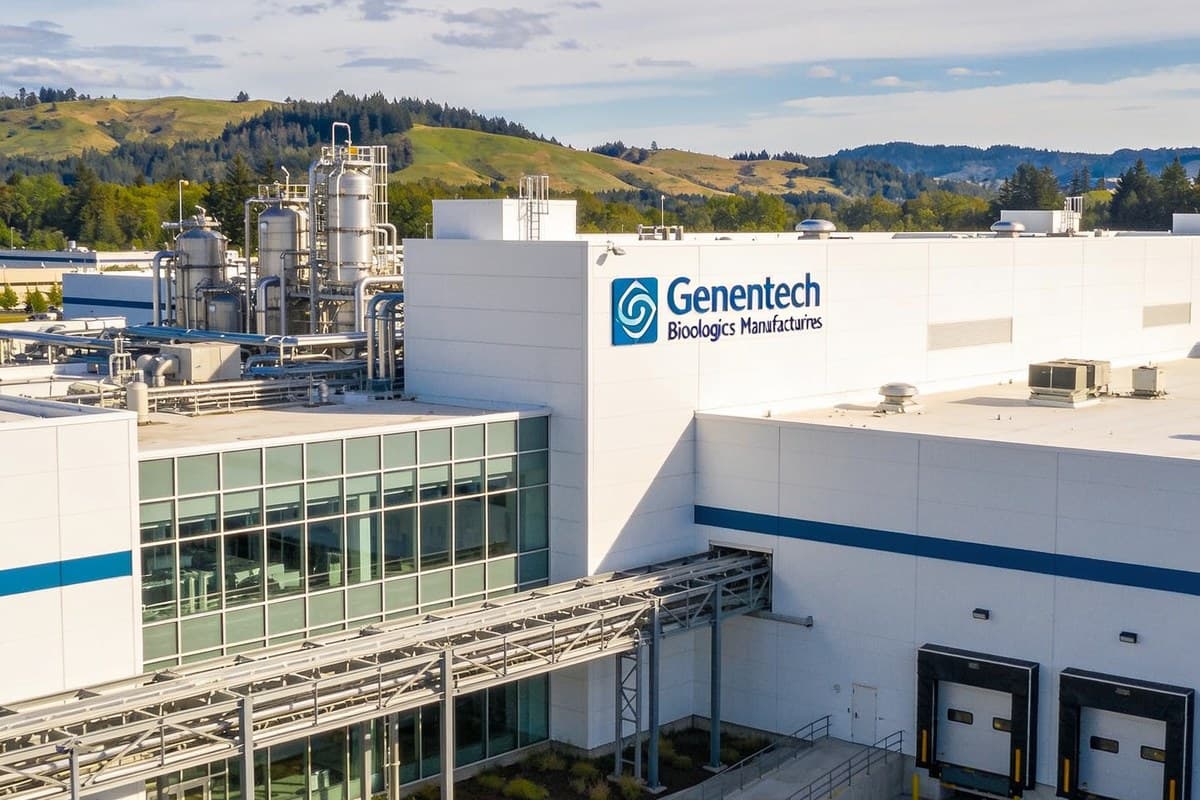
Genentech, the South San Francisco-based biotechnology pioneer and Roche subsidiary, has announced a $750 million investment to build a new manufacturing facility in Hillsboro, Oregon, marking one of the largest single-site pharmaceutical manufacturing commitments in the Pacific Northwest in recent years. The facility will occupy more than 100 acres and is expected to create approximately 800 construction jobs during the buildout phase, with commercial operations targeted for 2029. The investment underscores Roche's confidence in long-term demand for large-molecule therapeutics and signals continued capacity expansion among top-tier biopharma companies even as the industry navigates pricing pressure and regulatory uncertainty.
The new Hillsboro plant will focus on the production of biologic medicines, including monoclonal antibodies and other complex therapeutic proteins that form the backbone of Genentech's oncology, immunology, and neuroscience portfolio. Genentech already operates major manufacturing sites in South San Francisco, Vacaville, and Oceanside in California, as well as facilities in Singapore and Germany. The Oregon expansion adds geographic diversity to the company's production network, a strategic consideration that has gained importance following pandemic-era supply chain disruptions and increasing regulatory emphasis on manufacturing redundancy for critical medicines.
For API suppliers, contract development and manufacturing organizations, and bioprocessing equipment vendors, the Genentech announcement represents a significant demand signal. Large-scale biologics facilities require substantial volumes of cell culture media, chromatography resins, single-use bioreactor bags, filtration membranes, and fill-finish consumables. Industry analysts estimate that a facility of this scale could generate $50 million to $100 million in annual consumables procurement once fully operational, with additional capital expenditure on upstream and downstream processing equipment during the construction and commissioning phases that will benefit specialized equipment manufacturers and engineering services firms.
The Hillsboro site selection reflects a broader trend of pharmaceutical manufacturing investment in states with favorable tax incentives, skilled workforce availability, and proximity to established biotech corridors. Oregon offers a competitive package of state-level incentives for advanced manufacturing, and the Hillsboro area is already home to operations from Intel, Lattice Semiconductor, and other technology companies that have trained a local workforce in precision manufacturing and cleanroom operations. Genentech's decision to locate in the Portland metropolitan area also positions the facility within efficient logistics reach of West Coast ports for global distribution.
Roche's commitment to US manufacturing expansion comes at a time when the pharmaceutical industry faces growing pressure to onshore production capabilities. The PDUFA VIII reauthorization, currently under negotiation, includes provisions that incentivize domestic clinical trial activity and manufacturing, with proposed fee reductions of up to 50 percent for sponsors conducting US-anchored Phase 1 studies. These regulatory tailwinds, combined with the CHIPS and Science Act's spillover effects on advanced manufacturing infrastructure, create a favorable environment for large-scale facility investments by both innovator companies and their contract manufacturing partners.
The biologics manufacturing capacity market has been a source of persistent concern for industry planners. Despite billions of dollars in new construction announced by Samsung Biologics, Lonza, WuXi Biologics, and other CDMOs over the past three years, demand for mammalian cell culture capacity continues to outstrip supply for many therapeutic modalities. Antibody-drug conjugates, bispecific antibodies, and gene therapy viral vectors each require specialized production capabilities that cannot be easily repurposed from existing monoclonal antibody lines, creating bottlenecks that favor companies with diversified in-house manufacturing portfolios and the financial resources to build dedicated capacity.
Genentech's expansion also has implications for the competitive landscape among large pharmaceutical companies. Roche has historically maintained a higher degree of manufacturing self-sufficiency than many of its peers, with in-house capabilities spanning small-molecule API synthesis, biologics production, and diagnostics manufacturing. By adding capacity in Oregon while competitors like Bristol Myers Squibb build out their Houston biologics campus and Pfizer restructures its global production network, Roche is reinforcing its position as one of the few companies capable of supporting a fully integrated development-to-commercialization pipeline without heavy reliance on external CDMO partners.
The investment timeline of 2029 for commercial operations aligns with several major product milestones in Genentech's pipeline. The company's next-generation oncology candidates, including novel bispecific T-cell engagers and antibody-drug conjugates, are expected to reach late-stage clinical development or early commercialization within the next two to three years. Having dedicated manufacturing capacity online by 2029 would provide the production headroom needed to support launches without the capacity constraints that have delayed product availability for some competitors in recent years.
For pharmaceutical suppliers and service providers, the Genentech announcement reinforces the importance of maintaining relationships with major innovator companies as they execute multi-year capacity buildouts. Equipment vendors, raw material suppliers, and specialized logistics providers that can demonstrate reliability, quality compliance, and scalability will be best positioned to capture procurement opportunities as new facilities move from construction through commissioning and into full production. The $750 million commitment from one of the industry's most established players sends a clear signal that biologics manufacturing demand remains robust and that the long-term growth trajectory for high-quality pharmaceutical ingredients and consumables is firmly intact despite near-term market volatility.
The Oregon facility announcement also comes at a moment when the global pharmaceutical supply chain is being reshaped by geopolitical forces, including US-China tensions and the Biosecure Act's potential restrictions on Chinese CDMO partnerships. By investing in domestic production capacity, Genentech and Roche are proactively addressing the risk of supply chain disruptions and positioning themselves to meet regulatory requirements that may increasingly favor US-manufactured biologics. This strategic foresight benefits the entire domestic supplier ecosystem, from raw material producers to contract testing laboratories and cold chain logistics providers, all of whom stand to gain from the ongoing shift toward onshored pharmaceutical manufacturing.
How can we help you?
Receive insights into the latest events and regulatory updates
Sent directly to your email
Get industry insights and Unibest news here
Contact Us →