
Industry News
GSK Licenses Hutchmed's Dual-Targeting KRAS-EGFR Cancer Drug for $110M Upfront, Signaling Growing Demand for Complex Antibody-Drug Conjugate Manufacturing
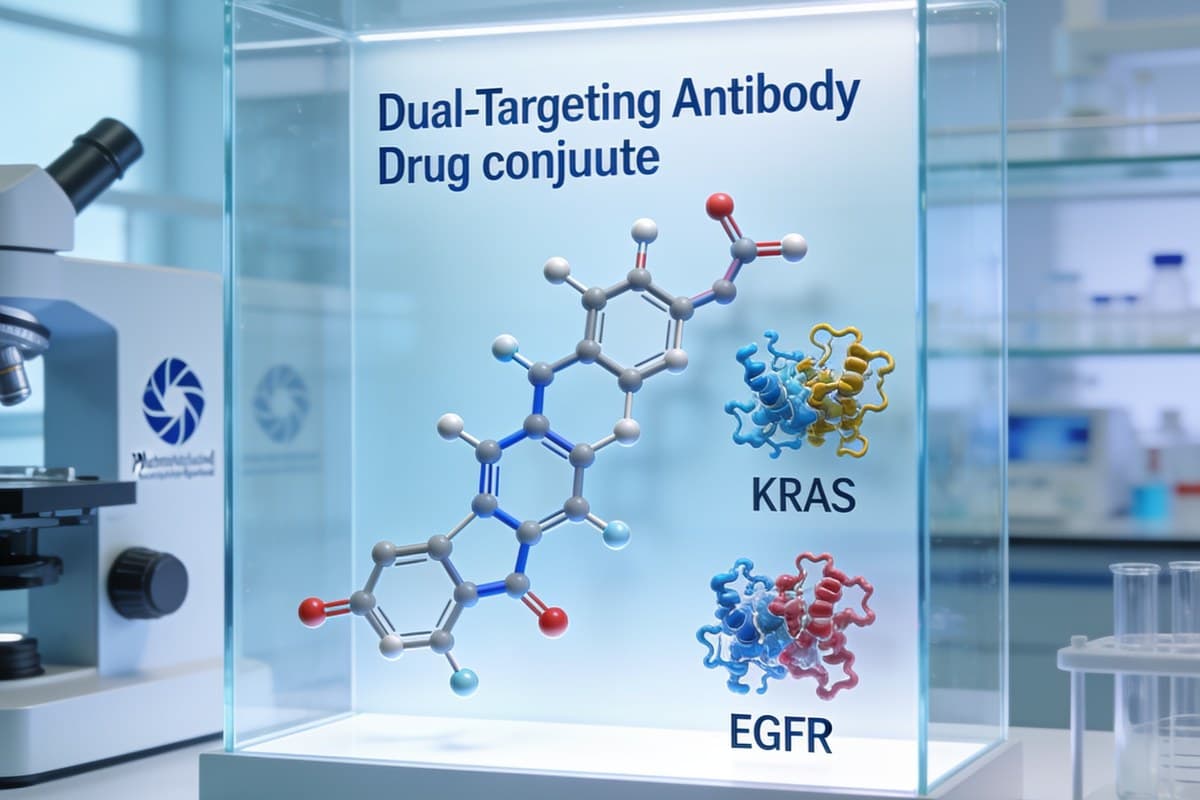
GlaxoSmithKline has agreed to license Hutchmed's dual-targeting cancer drug HMPL-A830 for $110 million upfront, with the deal value potentially reaching $1.295 billion including milestone payments. The agreement, which remains subject to antitrust clearance, gives GSK exclusive rights to develop and commercialize the antibody-targeted therapy conjugate outside of China, Hong Kong, Macau, and Taiwan. For pharmaceutical suppliers and contract manufacturers, the deal signals growing demand for next-generation antibody-drug conjugate production capabilities that can handle complex dual-targeting modalities.
HMPL-A830 represents a novel class of cancer therapy that simultaneously targets both EGFR and KRAS, two of the most commonly mutated oncogenes across multiple tumor types. EGFR-driven cancers are prevalent in non-small cell lung cancer and colorectal cancer, while KRAS mutations appear frequently in pancreatic, colorectal, and lung adenocarcinomas. By engaging both pathways in a single molecule, Hutchmed's approach aims to overcome the resistance mechanisms that have historically limited single-target therapies. The drug is currently in early-stage clinical development, with Hutchmed having generated preliminary efficacy data that attracted GSK's interest.
The transaction extends GSK's aggressive dealmaking in oncology, following its $10.6 billion acquisition of Nuvalent for the ROS1 inhibitor Jideytro and its earlier partnership with Hansoh Pharma on a B7-H3 antibody-drug conjugate for lung cancer. GSK's oncology pivot has been driven by the impending loss of exclusivity on several legacy products and a strategic imperative to build a differentiated cancer pipeline. Each of these deals carries significant implications for API and biologics manufacturing demand, as GSK scales up production infrastructure to support late-stage clinical trials and potential commercial launches.
For the pharmaceutical supply chain, the GSK-Hutchmed deal highlights several important trends. First, antibody-targeted therapy conjugates require sophisticated manufacturing capabilities that blend traditional biologics production with small-molecule linker-payload chemistry. CDMOs with expertise in both modalities stand to benefit as more dual-targeting drugs enter clinical development. Second, the deal underscores the continued importance of China-origin licensing as a source of innovation, with Western pharma companies willing to pay premium prices for differentiated assets that address large patient populations in colorectal, pancreatic, and lung cancers.
The KRAS target has experienced a renaissance in recent years after decades of being considered undruggable. Revolution Medicines' Rasonque, which won FDA approval for pancreatic cancer in August 2026, demonstrated the clinical viability of pan-RAS inhibition. Roche's divarasib has shown competitive advantages over Amgen and Bristol Myers Squibb's earlier KRAS G12C inhibitors in head-to-head lung cancer trials. GSK's entry into the KRAS space through Hutchmed's dual-targeting approach adds another dimension to this competitive landscape, potentially creating demand for specialized API synthesis and conjugation services.
Hutchmed, headquartered in Hong Kong with significant operations in mainland China, has built a reputation as one of China's most productive oncology-focused biopharmaceutical companies. The company's fruquintinib, marketed as Elunate in China for colorectal cancer, was previously licensed to Takeda for global commercialization. The HMPL-A830 deal with GSK represents Hutchmed's largest licensing agreement to date and validates the company's chemistry platform for generating complex targeted therapies. For API suppliers, Hutchmed's growing pipeline suggests sustained demand for the specialized intermediates and active ingredients required to produce antibody-targeted therapy conjugates.
The manufacturing requirements for HMPL-A830 will likely involve multiple specialized production steps. The antibody component requires mammalian cell culture and standard biologics purification processes, while the KRAS and EGFR targeting moieties may involve synthetic chemistry and conjugation techniques. Quality control for dual-targeting molecules is inherently more complex than for conventional monoclonal antibodies, as manufacturers must validate binding affinity and specificity for two distinct targets simultaneously. CDMOs that have invested in integrated biologics-small molecule platforms are well-positioned to capture this emerging demand.
From a market perspective, the colorectal and pancreatic cancer indications targeted by HMPL-A830 represent substantial unmet medical need. Colorectal cancer is the third most commonly diagnosed cancer globally, with approximately 1.9 million new cases annually. Pancreatic cancer remains one of the deadliest malignancies, with a five-year survival rate below 12 percent. If HMPL-A830 demonstrates meaningful clinical benefit in these indications, the manufacturing scale-up required to meet global demand could be substantial, creating opportunities across the pharmaceutical supply chain from raw materials to finished dosage forms.
The deal also reflects a broader pattern of mid-to-large cap pharma companies licensing early-stage assets from Asian biotechs rather than pursuing outright acquisitions. This structure allows GSK to spread its financial risk through milestone-based payments while maintaining the option to in-license additional compounds from Hutchmed's pipeline. For pharmaceutical suppliers, this trend suggests a more distributed manufacturing landscape, with production potentially split between GSK's internal facilities and external CDMOs across multiple geographies to support clinical trials in different regions.
As GSK awaits antitrust clearance and begins integrating HMPL-A830 into its oncology development pipeline, the pharmaceutical supply chain should prepare for increased demand in several categories: antibody-drug conjugate manufacturing services, specialized linker-payload chemistry, dual-targeting molecule characterization and quality testing, and clinical-scale biologics production. The deal reinforces the view that complex targeted therapies, particularly those originating from China's innovative biotech sector, will be a major driver of pharmaceutical manufacturing demand in the coming years.
How can we help you?
Receive insights into the latest events and regulatory updates
Sent directly to your email
Get industry insights and Unibest news here
Contact Us →