
Industry News
Samsung Biologics Bids $1.8B for PolyPeptide, Entering Peptide CDMO Market Amid GLP-1 Manufacturing Boom
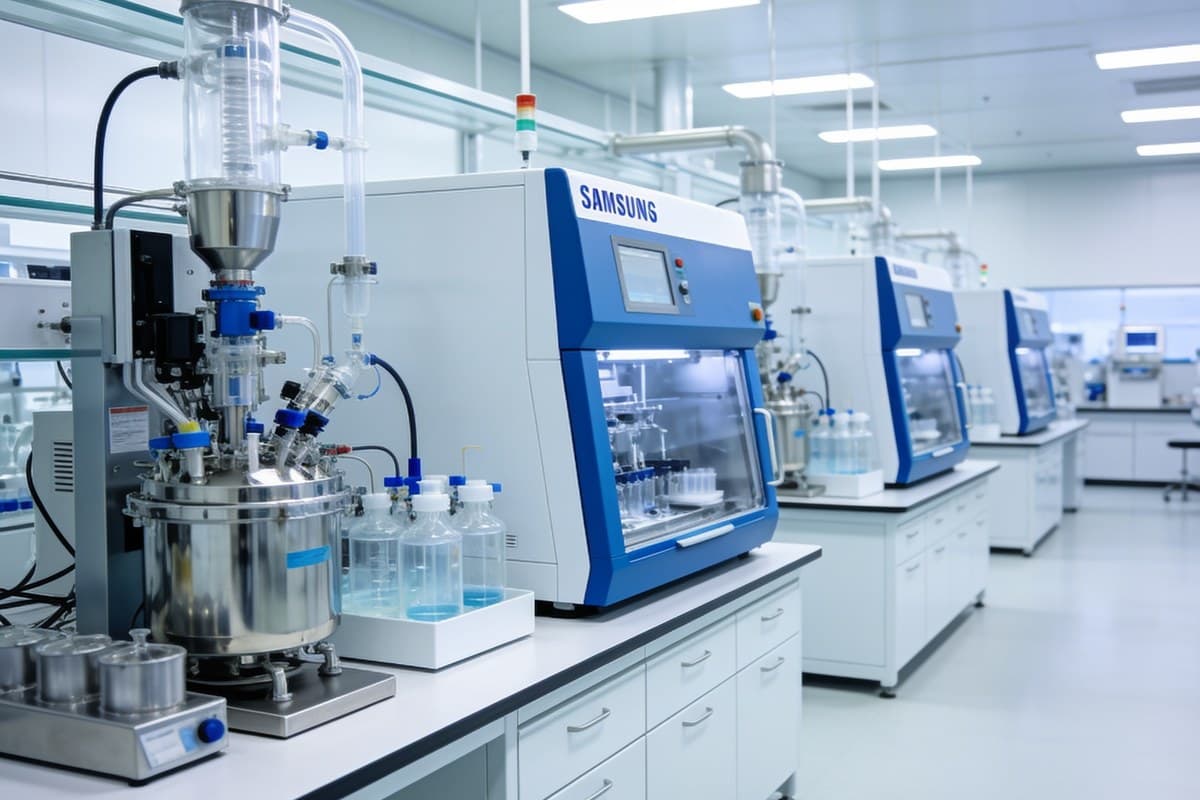
Samsung Biologics has made a decisive move into the peptide contract manufacturing space with a $1.8 billion offer to acquire PolyPeptide Group, the Swiss-based specialist in peptide active pharmaceutical ingredients. The deal, announced this week, signals a major strategic shift for the world's largest biologics CDMO as it seeks to capture a share of the surging demand for peptide-based therapeutics driven by the GLP-1 receptor agonist boom. The acquisition would mark Samsung's first expansion beyond its traditional biologics manufacturing focus and position the South Korean giant as a formidable competitor in the rapidly growing peptide CDMO market.
PolyPeptide Group, headquartered in Switzerland and controlled by the Draupnir Holding family trust, operates manufacturing facilities across Europe and North America with decades of expertise in solid-phase and solution-phase peptide synthesis. The company's portfolio spans both generic and proprietary peptide APIs, supplying major pharmaceutical companies developing treatments for metabolic diseases, oncology, and rare conditions. With GMP-compliant production sites in Sweden, France, Switzerland, and the United States, PolyPeptide has built a reputation as one of the world's leading peptide API manufacturers, with particular strength in large-scale commercial production of complex therapeutic peptides.
The strategic logic behind the acquisition is compelling. GLP-1 receptor agonists — including Novo Nordisk's semaglutide products and Eli Lilly's tirzepatide franchise — have become the fastest-growing drug class in pharmaceutical history, with combined annual revenues exceeding $50 billion and projections suggesting the market could surpass $100 billion by 2030. These molecules are complex peptides requiring specialized manufacturing capabilities that few CDMOs can provide at commercial scale. The growing pipeline of next-generation GLP-1 agonists, dual agonists, and oral peptide formulations ensures that demand for peptide manufacturing capacity will continue to outstrip supply for years to come.
PolyPeptide's existing capacity and technical expertise position Samsung to serve this rapidly expanding market without building peptide capabilities from scratch. The Swiss company brings not only manufacturing infrastructure but also deep regulatory expertise, having secured approvals from the FDA, EMA, and other major regulatory agencies for its peptide API products. This regulatory track record is invaluable in an industry where facility qualifications and product approvals can take years to achieve, giving Samsung immediate credibility in the peptide CDMO space.
For API suppliers and intermediates manufacturers, this acquisition carries significant supply chain implications. Samsung Biologics has historically focused exclusively on biologics — monoclonal antibodies, recombinant proteins, and biosimilars — operating the world's largest single-site biologics manufacturing facility in Incheon, South Korea. The addition of peptide manufacturing creates a diversified CDMO platform that could attract pharmaceutical companies seeking integrated development and manufacturing partnerships spanning both biologic and peptide modalities. This one-stop-shop model is increasingly valued by pharmaceutical sponsors looking to simplify their supply chains and reduce the complexity of managing multiple CDMO relationships.
The deal also reflects a broader trend of CDMO consolidation driven by capacity constraints in peptide manufacturing. As multiple GLP-1 drug developers compete for limited peptide API production slots, contract manufacturers with available capacity command premium valuations. Industry estimates suggest that global peptide manufacturing capacity must double within the next five years to meet projected demand, a challenge that established players like Lonza, Bachem, and CordenPharma are racing to address through organic expansion. Samsung's entry with its substantial financial resources and operational scale could accelerate capacity expansion and intensify competition, potentially benefiting pharmaceutical sponsors through improved access to manufacturing slots and more competitive pricing for peptide API supply agreements.
The implications for the broader API supply chain extend beyond peptide manufacturing itself. Samsung's move suggests that the distinction between biologics and chemical synthesis CDMOs is blurring as customers increasingly seek partners capable of handling diverse molecular modalities. For intermediates and fine chemicals suppliers, this trend could create new opportunities as expanded peptide manufacturing drives demand for protected amino acids, coupling reagents, resins, and purification materials at unprecedented volumes. Suppliers of Fmoc-amino acids, HATU/HBTU coupling reagents, and Wang/Rink resins may see particularly strong demand growth as Samsung and other CDMOs expand their peptide production capacity.
The transaction is expected to close in the second half of 2026, subject to regulatory approvals from competition authorities in the European Union, United States, and other key jurisdictions. For pharmaceutical companies with peptide-based pipelines, the deal underscores the urgency of securing manufacturing capacity in an increasingly constrained market. API suppliers and intermediates manufacturers should monitor how Samsung's entry reshapes competitive dynamics in the peptide CDMO sector, as the integration of biologics and peptide manufacturing capabilities may signal a new era of molecular modality convergence in pharmaceutical outsourcing.
How can we help you?
Receive insights into the latest events and regulatory updates
Sent directly to your email
Get industry insights and Unibest news here
Contact Us →