
Industry News
Trump Threatens Up to 200% Tariffs on Imported Generic Drugs, Signaling Major API Supply Chain Disruption
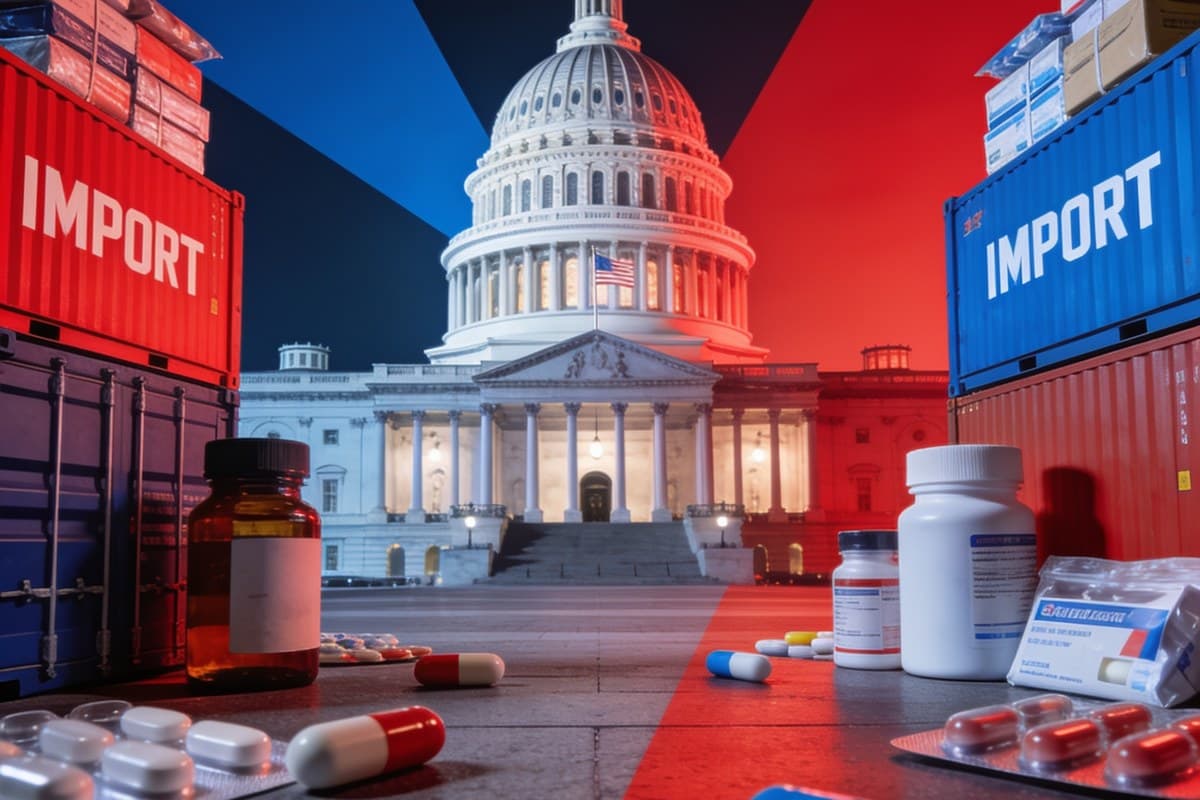
The Trump administration has escalated its trade offensive into the pharmaceutical sector with a stark new proposal: tariffs of up to 200% on imported generic drugs. While earlier discussions of pharmaceutical tariffs focused primarily on branded medicines — where the impact on drugmaker revenues proved modest given existing domestic manufacturing — the targeting of generic drugs represents a fundamentally different calculus with far more disruptive potential for the global pharmaceutical supply chain. The proposal, if implemented, would be the most aggressive trade action ever taken against the generic pharmaceutical industry and could reshape how medicines are manufactured and sourced worldwide.
Generic drugs account for approximately 90% of all prescriptions dispensed in the United States, and the vast majority of their active pharmaceutical ingredients originate from manufacturing facilities in China and India. The proposed tariffs, if implemented at the threatened levels, would dramatically alter the cost structure of generic drug production and could trigger a cascade of supply chain adjustments that API suppliers, intermediates manufacturers, and finished dosage form producers must begin planning for immediately. Industry estimates suggest that China alone supplies approximately 40% of the APIs used in U.S. generic drugs, with India contributing another 30% — either through direct API exports or finished dosage forms manufactured using Chinese-sourced intermediates.
Unlike branded pharmaceuticals, where manufacturers have pricing power and established domestic production networks, generic drugmakers operate on razor-thin margins — often just 5% to 10% net income — making them exceptionally vulnerable to input cost increases. A 200% tariff on imported generics would effectively render many China- and India-sourced products unviable at current pricing, forcing either massive price increases for consumers or a rapid shift to alternative sourcing strategies. For API suppliers with manufacturing capacity outside the targeted regions, this represents an unprecedented opportunity to capture market share in a market valued at over $100 billion annually.
The timing of the tariff threat is particularly significant given the ongoing drug shortage crisis in the United States. With 227 active drug shortages as of the latest ASHP data — many involving generic injectables with single-manufacturer supply chains — any disruption to existing API sourcing could exacerbate already critical shortages of essential medicines including chemotherapy agents, antibiotics, and cardiovascular drugs. Industry analysts warn that a blanket tariff approach, without exemptions for critical medications, could create immediate patient access issues and force hospitals to ration certain treatments. The ASHP has called for targeted exemptions for drugs already in shortage, but the administration has not yet indicated whether such carve-outs will be included.
For Chinese and Indian API manufacturers, the proposed tariffs present an existential challenge to their largest export market. China's pharmaceutical ingredient industry has invested billions of dollars over the past two decades in building scale, quality systems, and FDA-compliant manufacturing facilities. A sudden 200% tariff would effectively eliminate the cost advantage that drove this investment, potentially forcing manufacturers to seek alternative markets in Europe, Southeast Asia, and Latin America — regions that may not have the capacity or willingness to absorb redirected supply. Indian generic manufacturers, many of whom depend on Chinese APIs for their own formulations, would face a double impact from both direct tariffs and increased input costs.
The pharmaceutical industry's response has been measured but urgent. The Association for Accessible Medicines, which represents generic drugmakers, has warned that the tariffs could worsen drug shortages and increase healthcare costs by billions of dollars annually. Meanwhile, some large generic manufacturers are already signaling accelerated investment in non-targeted manufacturing regions. Companies with existing facilities in the European Union, South Korea, Japan, or Southeast Asia may find themselves with a significant competitive advantage as U.S. customers seek to diversify away from tariff-affected supply chains. Several major CDMOs have reported increased inquiry volumes from generic drug companies exploring manufacturing relocation options.
The proposed tariff structure also raises questions about the practicalities of pharmaceutical trade. Unlike consumer goods, pharmaceutical supply chains involve complex multi-step manufacturing processes where APIs may be synthesized in one country, processed into intermediates in another, formulated into finished products in a third, and packaged in a fourth. Determining the country of origin for tariff purposes in such chains is notoriously difficult, and the pharmaceutical industry is likely to push for clear rules of origin that account for value-added manufacturing steps rather than simply the location of the final production stage. Without such clarity, companies may face significant compliance uncertainty and potential litigation over tariff classifications.
For pharmaceutical companies evaluating their supply chain strategies, the tariff threat accelerates trends that were already underway in the wake of COVID-era disruptions. The pandemic exposed vulnerabilities in concentrated API sourcing and prompted many companies to begin diversifying their supplier bases. The proposed tariffs add a new dimension to this calculus — not just supply security, but also tariff avoidance — and may tip the balance for companies that had been weighing the higher costs of multi-region sourcing against the risks of concentrated supply. API suppliers with quality-compliant facilities in non-targeted regions, established regulatory filings with the FDA, and the ability to scale production quickly will be best positioned to capture redirected demand.
Looking ahead, the coming weeks will be critical as the administration finalizes the tariff structure and the industry assesses the true scope of potential supply chain disruption. Generic drug companies are expected to engage in intensive lobbying for exemptions, phased implementation, or reduced tariff levels, while simultaneously accelerating contingency planning. For API suppliers and CDMO partners, this is a moment to proactively engage with customers about supply continuity, demonstrate manufacturing flexibility, and prepare for a potential surge in demand from companies seeking to reshore or diversify their API sourcing. Regardless of the final tariff levels, this proposal marks a watershed moment for global pharmaceutical supply chains — the era of cost-optimized, concentrated API sourcing from a small number of low-cost manufacturing hubs is giving way to a new paradigm where supply security, geopolitical risk, and manufacturing diversification carry equal weight alongside cost efficiency.
How can we help you?
Receive insights into the latest events and regulatory updates
Sent directly to your email
Get industry insights and Unibest news here
Contact Us →